Production of potatoes, onions and garlic could be halved if the rains do not arrive, according to Conveagro
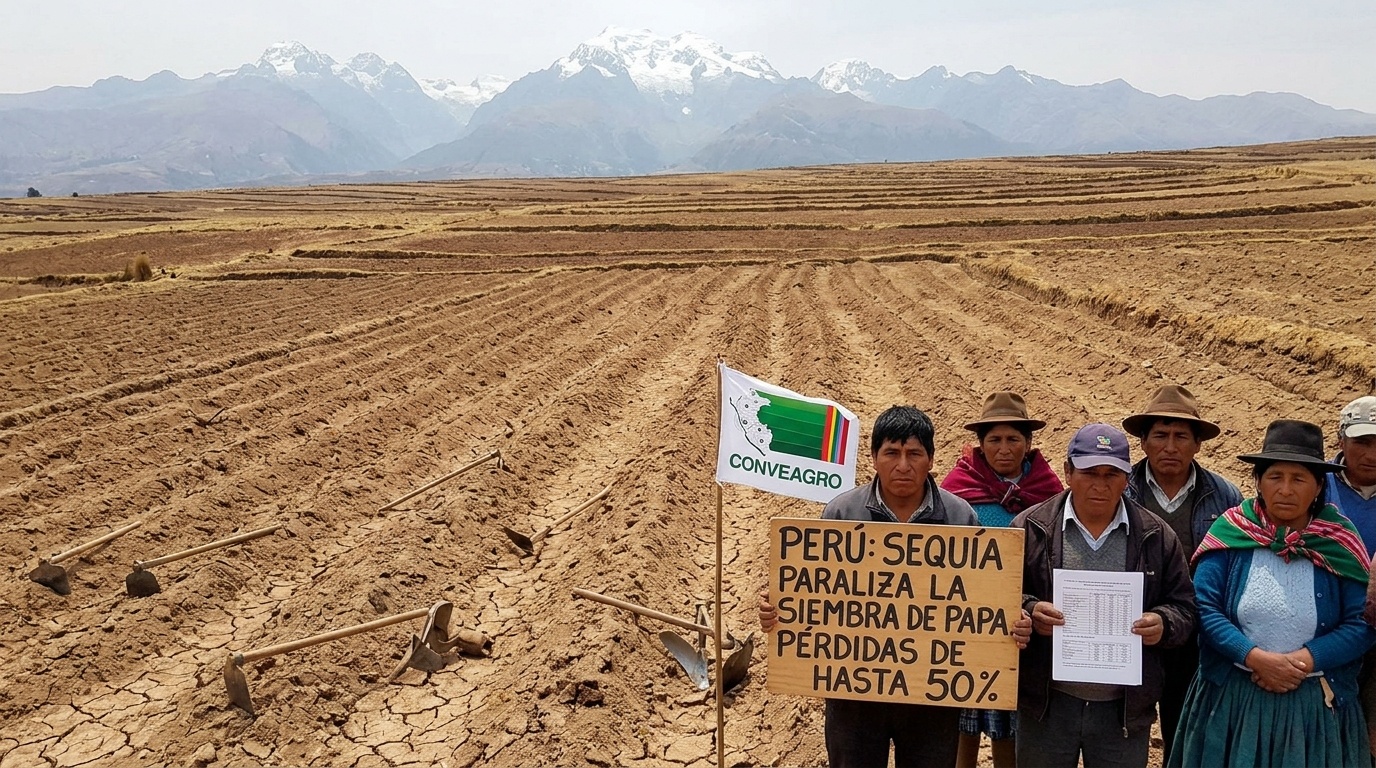
Potato planting in the highlands of southern and central Peru has been held up by a lack of rain, and the country’s national agricultural convention, Conveagro, is warning that output of potatoes, onions and garlic could fall by as much as 50%. The figure is the organisation’s own projection rather than a confirmed loss.
Planting delayed
Weekdays. Unsubscribe in one click.
Luis Cruz Cuadros, Conveagro’s representative on the El Niño phenomenon, told the broadcaster Exitosa on 4 November that potato planting scheduled for September and October has not gone ahead in the southern and central highlands because the rains have failed. He said the country was entering a severe drought, and that crops would simply go unplanted. He added that, in his organisation’s calculation, output of potatoes, onions and garlic would be around half of normal.
Cruz Cuadros said the persistence of the water deficit could shrink harvests and progressively affect supplies to markets. Conveagro has called for immediate action and closer coordination between the different levels of government to support affected producers. He noted that around 80% of the potato crop in these areas is rainfed, leaving growers with no alternative water source.
A crop at the centre of the Andean economy
Peru is Latin America’s largest potato producer. According to the Ministry of Agrarian Development and Irrigation (Midagri), the country harvested 6.9 million tonnes in 2025 from 373,300 hectares, at an average yield of 20.6 tonnes per hectare. The crop supports more than 711,000 farming families. Production is concentrated in the Andes: in 2024 the largest volumes came from Puno (1.2 million tonnes), Huánuco (792,000 tonnes) and Ayacucho (716,000 tonnes).
About 77% of the annual potato harvest in Peru is gathered in the first half of the year. Should the projected shortfall materialise, the main impact on supply would therefore be expected in the early months of 2027 rather than in the coming weeks.
El Niño pulls in opposite directions
The picture is complicated by the uneven effects of El Niño. Midagri has warned that the phenomenon is likely to bring rainfall deficits in the south of the country while heavy rain is expected in the north. A national planting-intentions survey for the 2026/27 season, carried out in May before El Niño strengthened, had pointed to moderate growth in planted area for potatoes among other crops. Experts now expect the strongest impact on South American agriculture to be felt between the last quarter of 2026 and the first months of 2027.
Conveagro’s projection does not break down the expected losses by crop or region beyond the southern and central highlands, and no estimate of the effect on prices has been published.
Sources: Exitosa Noticias, Argenpapa, Midagri, Agraria.pe, Gestión.